Showing posts with label Gold Plating. Show all posts

Monday, November 13, 2017

Gilding Process

Gold Plating Can do by Electroplating Process or Gilding Process:


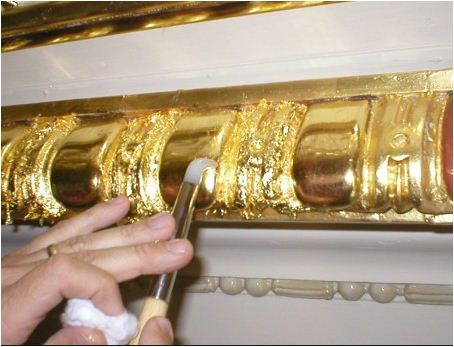
Gilding is actually a process to coated of object with gold leaf. While gold leaf is a thin sheet of gold sheet that usually use for gilding process. The quality of gold leaf also can be vary depend on the product sold that describe in karats and shades. So gilding process is actually gold plating, covering the surface of object with gold.

The process of gold plating can just by stick the gold leaf on the object or by electroplating that use electric current. Gilding process is a number technique of decorative finished applying in some object like wood, metal or other object. The process of gilding should by experience persons, this process include hand application and gluing. After the gold leaf being stick on the object, the next process can be burnishing, water gilding and oil gilding that is used by wood carvers and gilders. Experience person know what temperature can be applied on this process because if too hot, burnishing can make the surface of gold leaf can change into red color.

Gilding Process is use many kind of tools that like work in detail ornament:


gilding tools 1
Gilding Equipment 1

gilding tools 2
Gilding Equipment 2


Some example of Gilding products and their application:

gilding process
Gilding Process

gilding application
Gilding Application

gilding product
Gilding Product
Find other kind of gold plating process:


Saturday, April 12, 2014

Gold Plating Application

Gold plating is a unique surface with interesting yellow color. Beside the good color gold also have good properties to cover metal surface because it stand to corrosive weather and will not oxidized by water, other good properties of gold metal have electrical conductivity stays uniform over long periods resistance, good solderability, and when alloyed with cobalt, it has very good wear resistance. Gold is commonly used in electrical switch contacts, connectors pins and barrels, and other applications where intermittent electrical contact occurs.

Gold plating specification:
  • Type 1, with 99.7 % gold minimum, hardness grade A, B or C. Gold plating used for general purpose, high reliability electrical contacts, solderability, and wire wrap connection.
  • Type II, 99.0 % gold minimum; hardness grade B, C or D, A general purpose, wear resistant gold. But this equipment will not withstand to high temperature applications because the hardening agent in the gold plating will oxidize.
  • Type III, with 99.9 % gold minimum; hardness grade A only. Gold plating for semiconductor components nuclear engineering, thermo-compression bonding, and high temperature application.
Gold plating and Gold electroplating purity and coating thickness.

Any deposit of impurities can make difficult to solder, and for this reason high purity gold plating is preferred. Soldering requirements are best achieved when gold electroplating coating range between 0.00005 and 0.0001 inch (50 and 100 micro inches) thickness.

Gold Plating and Gold Electroplating hardness grades:
  1. 90 knoop, maximum
  2. 91 – 129 knoop, inclusive
  3. 130 – 200 knoop, inclusive
  4. 201 knoop, minimum


Wednesday, February 22, 2012

Gold Plating Price

Gold plating price depend on the plating area and how much the gold material used by them. Because the price of material is very expensive usually professional plating company have both small and large part facility service. Large part facility can be various sized barrels, racks and wiring purposes.

Gold is a very interest lustrous color and gold is one of the noble metal so it can stand for long time, which mean that it will not oxidized in air, so its electrical conductivity stays uniform over long period of time. Gold plating have good corrosion resistance, good solder ability, and if alloyed with cobalt will very good wear resistance. Because of this characteristic gold often use for electrical switch contact on certain important appliance, connector pins and barrels.

Several type of gold plating with variate hardness, the grade can be A, B, C or D. Plating with composition of 99.7% of gold minimum have hardness grade A, B or C.  Plating with content of 99.0% of gold have hardness grade B, C or D, that usually use for wear resistant material. Plating with gold content of 99.9% of gold will result hardness grade A only. Material with this plating use in semiconductor component, nuclear engine, thermocomponent bonding, and high temperature application.

Gold Price To Day Per Once:

gold price per once


Friday, November 25, 2011

Gold Decorative Plating

Gold plating often use for decorative purpose, to make the appliance more interest or to make some goods more durable to environmental. Gold plating also available in several colors or types such as type coating with 22ct it is mean that this as hard gold because on plating use mixed gold with other metal such as copper. This color more match with brass fittings and is known as antique gold.

Other color is more richer gold content, more traditional yellow color gold. Mostly for decorative purposes are copper plated then nickel plated prior to gold finish. The layer of nickel plating provides surface strength and protection function of the substrate whilst providing depth and brightness to the final gold plating finished.


Because of the high price gold plating usually applied in very fine thickness in micron thickness. Gold is a soft metal in its natural form and therefore more prone to wear. Gold plating have properties a harder wearing, longer lasting surface. Gold plating offer the advantages of same luster, appearance and color without a solid gold price.

Gold plating often apply to many tape ware like door handles, plates and hinges, Jewellery, architectural fittings, furniture trim, light fittings, church and temple items, trophies, medals and badges.

Sunday, April 26, 2009

Gilding or Gold Plating

Gold plating or gilding is also one of the eldest electroplating processes. A double cyanide type bath is used, but to reduce the capital investment this is usually extremely dilute. The consequent limitation on the maximum permissible current density and on the rate of plating is not important since the usual deposit is very thin, and is indeed often limited to that which gives the required color. For this reason of color other addition are often made to the bath.

Gold does not dissolve very freely as an anode; the cost of providing gold anodes is also considerable, so gold plating bath are often used with insoluble anodes of stainless steel, platinum or graphite until exhausted. Gilding is usually applied to embellish trinkets and cheap jewelery which will be subject only to mild conditions. Recently, however, much thicker and more carefully controlled deposits have been used in the electronics industry, mostly from pretented or proprietery solutions.

The process itself of gold plaiting is vary, some traditional practitioner used simple solution that is not too dangerous to the lung like cyanide solution that have poisonous character to human health. People must concern on their health before they will practice of this kind of electroplating. Many chemicals for many type of electroplating exert some dangerous gases while electroplating process is running.

Gilding or Gold Plating: